Skip to content

Terra Foundation Convening Grants support conversations, symposia, and workshops that stimulate interdisciplinary and intercultural exchange related to the visual arts of the United States and Indigenous arts of North America.

Convening Grants

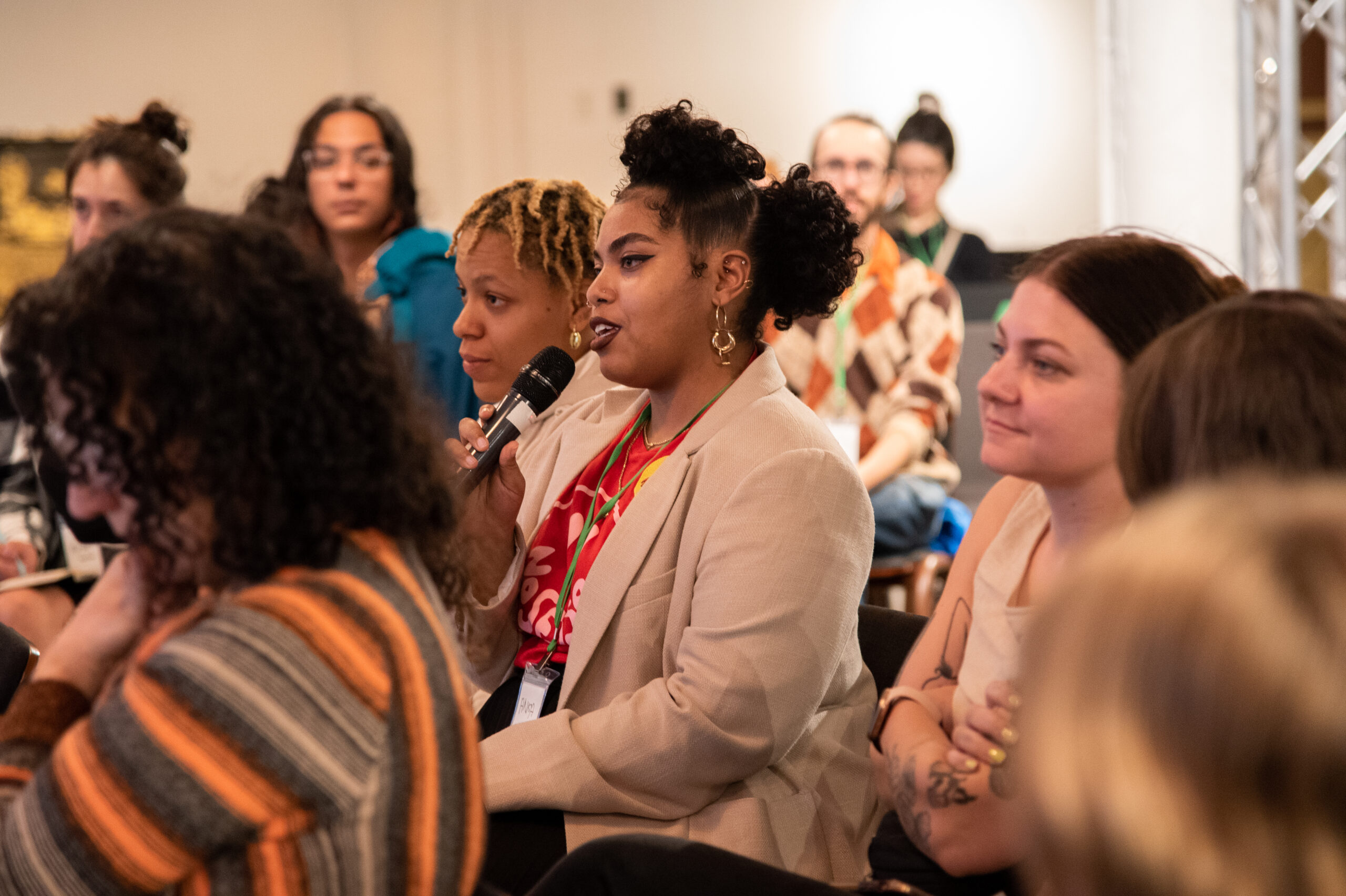
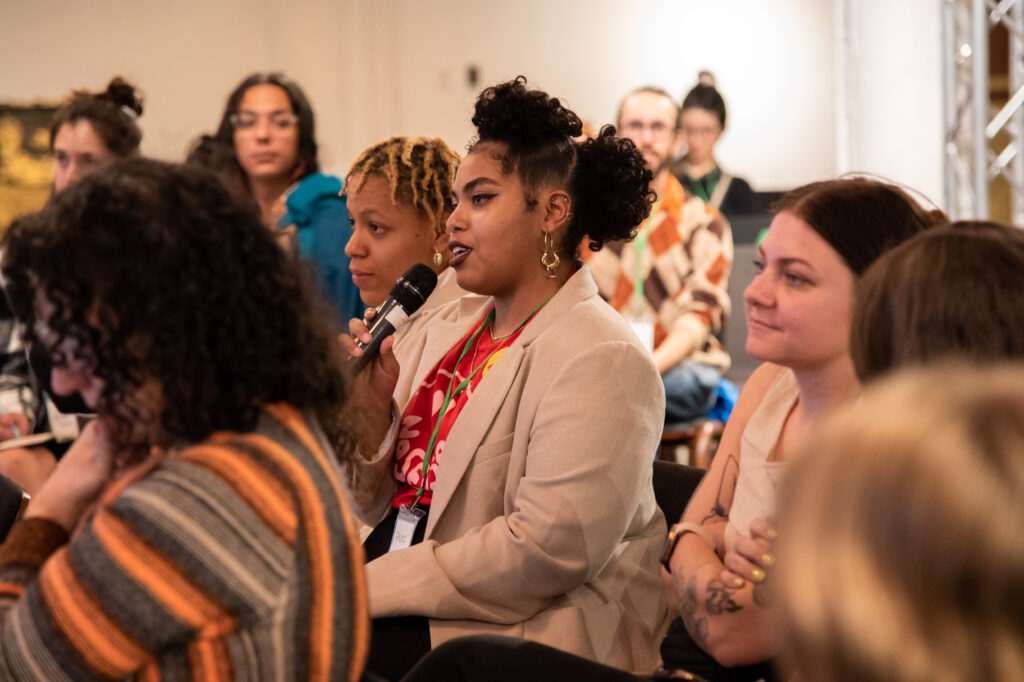
Person seated in a crowd asking a question into a microphone.

“How can we gather now?,” March 31–April 2, 2023, produced by Washington Project for the Arts, co-directed by Asad Raza & Prem Krishnamurthy, symposium attendee Anisa Olufemi asks a question during Stefanie Hessler’s keynote lecture, photo by McKenzie Grant-Gordon courtesy of Washington Project for the Arts.

Open

Convening Grant Deadlines

For programs taking place after May 1, 2027:
Inquiry Due September 28, 2026
Proposal Due November 30, 2026
Grant Range $10K–$25K
For programs taking place after November 1, 2027:
Inquiry Due February 16, 2027
Proposal Due April 20, 2027
Grant Range $10K–$25K

Convening Grants

We encourage convenings that expand knowledge, nurture relationships, and inspire shifts in perspectives and practices across local and global networks.

We welcome proposals from arts centers, community-based cultural organizations (including associations), foundations, museums, research centers, and universities of varying sizes, annual budgets, and diverse geographies, within the United States and internationally.

We are open to convenings at any stage of a project: whether in early planning or more developed phases. In-person, virtual, and hybrid formats are eligible for funding.

–Convening grants typically range between $10,000 and $25,000.
–Grant support through this program is awarded twice yearly.
Grant Overview

Convenings are powerful tools for fostering intercultural exchange and transformative dialogue. Bringing together multiple perspectives, these gatherings deepen the understanding of how the visual arts are practiced in the United States and Indigenous North America.

Convenings are about people, places, and ideas. We believe that conversations exploring more inclusive histories of American art can be a catalyst for transformative change, especially when they are grounded in a shared commitment to partnership and accountability. These discussions may address a wide array of topics, ranging from those drawn from art history (historical works and eras as well as the contributions of contemporary art and artists) to questions of practice and institutional change.

Convening grant support is available for programs that:

–Share research in American art and professional practice in the field
–Address historical, contemporary, and/or critical issues that deepen, counter, or expand the stories and voices within the field

We invite interdisciplinary applications; however, the project’s primary focus must be anchored in the visual arts. For projects in which the visual arts of the United States and the Indigenous arts of North America are not central, there should be a clear explanation of how the convening advances global dialogue and/or drives change in the field of American art.

For convenings connected to permanent collection reinstallations or temporary exhibitions, please see our Collection Grant program and Exhibition Grant program.

Introduction

Convenings are powerful tools for fostering intercultural exchange and transformative dialogue. Bringing together multiple perspectives, these gatherings deepen the understanding of how the visual arts are practiced in the United States and Indigenous North America.

Convenings are about people, places, and ideas. We believe that conversations exploring more inclusive histories of American art can be a catalyst for transformative change, especially when they are grounded in a shared commitment to partnership and accountability. These discussions may address a wide array of topics, ranging from those drawn from art history (historical works and eras as well as the contributions of contemporary art and artists) to questions of practice and institutional change.

Convening grant support is available for programs that:

–Share research in American art and professional practice in the field
–Address historical, contemporary, and/or critical issues that deepen, counter, or expand the stories and voices within the field

We invite interdisciplinary applications; however, the project’s primary focus must be anchored in the visual arts. For projects in which the visual arts of the United States and the Indigenous arts of North America are not central, there should be a clear explanation of how the convening advances global dialogue and/or drives change in the field of American art.

For convenings connected to permanent collection reinstallations or temporary exhibitions, please see our Collection Grant program and Exhibition Grant program.

What We Fund

Grants may be used to offset planning and/or implementation costs for expenses such as:

–professional fees and honoraria
–artist fees (excluding commissions)
–travel
–AV support (including technicians, videography, and photography)
–ASL interpretation, translation, and speech-to-text services
–catering
–dissemination of research, in either digital or print formats
–marketing and outreach
–administrative costs (up to 20% of the grant)
–indirect costs (up to 15% of the grant)

Up to $5,000 of an awarded grant may be used to publish proceedings and/or other publications related to the project, whether online or in print; funds for this purpose need to be spent within one year of the event.

The Terra Foundation prefers not to be the sole funder of an event.

Foundation Priorities

The Terra Foundation supports projects that engage the visual arts of the United States and the Indigenous arts of North America, while questioning and broadening understandings of American art and transforming how its stories are told.

We encourage projects that:

–generate knowledge and interpretive frameworks that collectively reflect the full breadth and complexity of American art and its histories through the artists represented, voices included, and stories told
–engage artists, scholars, and communities who present a plurality of perspectives and methods, including intercultural and interdisciplinary approaches
–catalyze inclusive practices and expansive histories in the field of American art

Eligibility

All applicants must hold United States 501(c)(3) tax-exempt status or the international equivalent. Grants are not made to individuals.

This program is open to organizations worldwide. We welcome requests to support convenings at any stage of a project, whether in early planning or more developed phases. Convenings held in person, virtually, or in hybrid formats are eligible for support.

While the foundation welcomes requests from previous grantees, please note that we aim to support a broad range of organizations over time and do not accept applications from organizations that have received a Terra grant in the previous year (within the last two grant cycles). Grantees whose applications have previously been declined may reapply. Please reach out to our team well in advance of the open-call deadline (at least two weeks beforehand) to ask for assistance.

These programs are intended for scholarly, professional, and other targeted audiences. Currently we do not accept requests for:

–alumni gatherings
–annual conferences, annual general meetings, or summits
–capital expenditures
–commercial films and documentaries
–events focused on dramatic and musical arts, decorative arts and craft, or fashion
–fellowship programs
–festivals and award ceremonies
–general public programs (that relate to a preprogrammed exhibition or event)
–research databases
–residencies
–travel grants

How to Apply

Grant Inquiry Form
Use the Apply Now buttons to submit a grant inquiry form by the deadline indicated on this page. After reviewing your inquiry, the foundation may invite you to submit a grant proposal. Please ensure that the email address used to submit the grant inquiry is monitored regularly for notifications (including checking in spam and junk folders). Please contact us if you have not received an update within four weeks of the inquiry deadline.

Grant Proposal
If invited to submit a grant proposal, prospective applicants must complete the proposal to be considered for funding. Formal proposals and attachments must be written in English. Grant proposals are reviewed by an external panel of curators, researchers, and other arts professionals who represent a diverse range of backgrounds, perspectives, and approaches.

Contact Us

If you have questions about Convening Grants, please email Lucy Pike, Associate Program Officer, Convening Grants and Initiatives, at [email protected].

Inquiry and Proposal Forms

The application process asks applicants to clearly and concisely describe their project’s intended impact and outcomes, as well as explain how grant funds will supplement existing resources to achieve institutional goals. Please refer to the blank forms provided and reach out with any questions.

Grant Resources

Grant Resources

For more information on timelines, how to apply, eligibility, and other common questions, please review our Applicant Resources.

Current grantees, please visit Grantee Resources for information about creating and managing a grant, as well as crediting guidelines.

Supported Convening Projects

Previous Award Cycle

  • $25,000 median grant
  • 14 grants
  • $325,000 awarded

Words for our grantees

Networks of Survival, Ecologies of Flourishing gathers artists and researchers to workshop critical and creative projects in progress relating to themes of creative social survival and ecological sustainability in a time of global and planetary crisis … By forging transnational connections between Filipinx and Philippine artists and local environmental advocacies, it will strengthen the Alfredo F. Tadiar Library’s emerging role as a progressive force for shaping new cultural ecologies.

Recent Convening Grants

View the database to learn more about previous Convening projects.

Additional Grant Opportunities

Two people looking at a painting on a well, with a sculpture to their left.

The Stories We Carry, collection reinstallation, Seattle Museum of Art, copyright: Chloe Collyer

Gallery installation with people viewing art.

Installation view of Americans in Paris: Artists Working in Postwar France, 1946–1962. Photo: David Heald. Courtesy Grey Art Museum, New York University

Stories and News

A multi-colored image with different patterns.

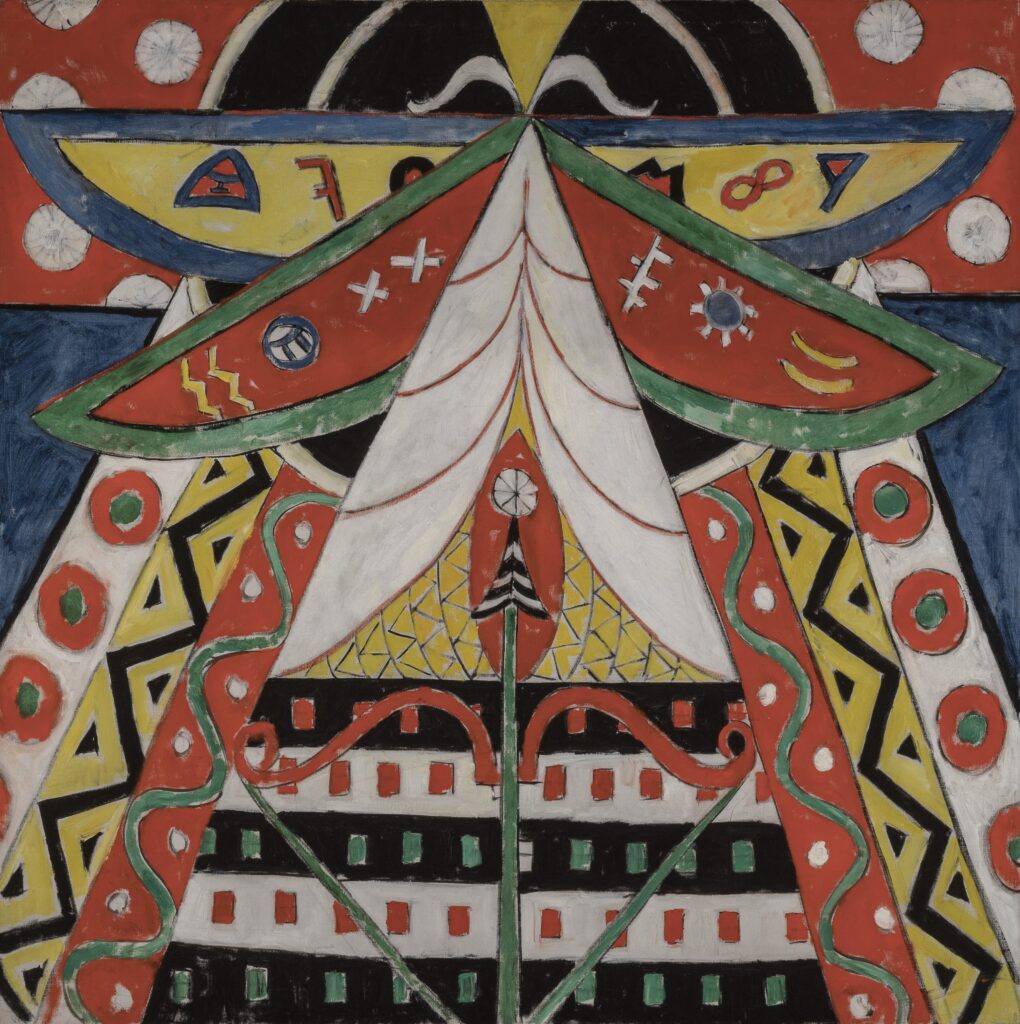
Marsden Hartley (American, 1877–1943), Painting No. 50,1914–15. Oil on canvas, 47 × 47 in. (119.4 × 119.4 cm). Terra Foundation for American Art. Daniel J. Terra Collection, 1999.61 .

An image of a group of people sitting on stage.

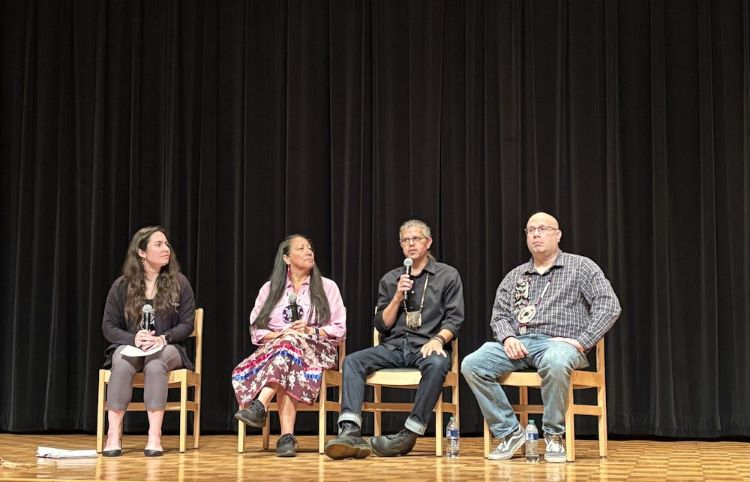
From left to right, moderator Zada Ballew, Christine Rapp-Morseau, Jason Wesaw and David Martin share their experiences with expressing their Potawatomi culture through art. Photo by Aynslee Dellacca / The Observer.

A photograph looking down toward an auditorium stage on which seven people are seated. One person on the stage holds a microphone and addresses the room.

Musées partagés octobre 2022. Photo Anne Volery © Palais de la Porte Dorée