The National Gallery houses an important collection of 2,400 paintings in the Western tradition by major artists from the thirteenth to the early twentieth centuries. Founded in 1824 and located in the heart of London, the Gallery offers a wide-ranging program of exhibitions and learning activities, including modern and contemporary programs. The museum plays a leading role in interdisciplinary research. Its key objectives are to preserve, enhance, and develop the collection for the public’s enjoyment and understanding; inspire learning, engagement, and research; and reach the widest possible audience by opening our permanent collection free of charge and through exhibitions, public programming, and digital means.
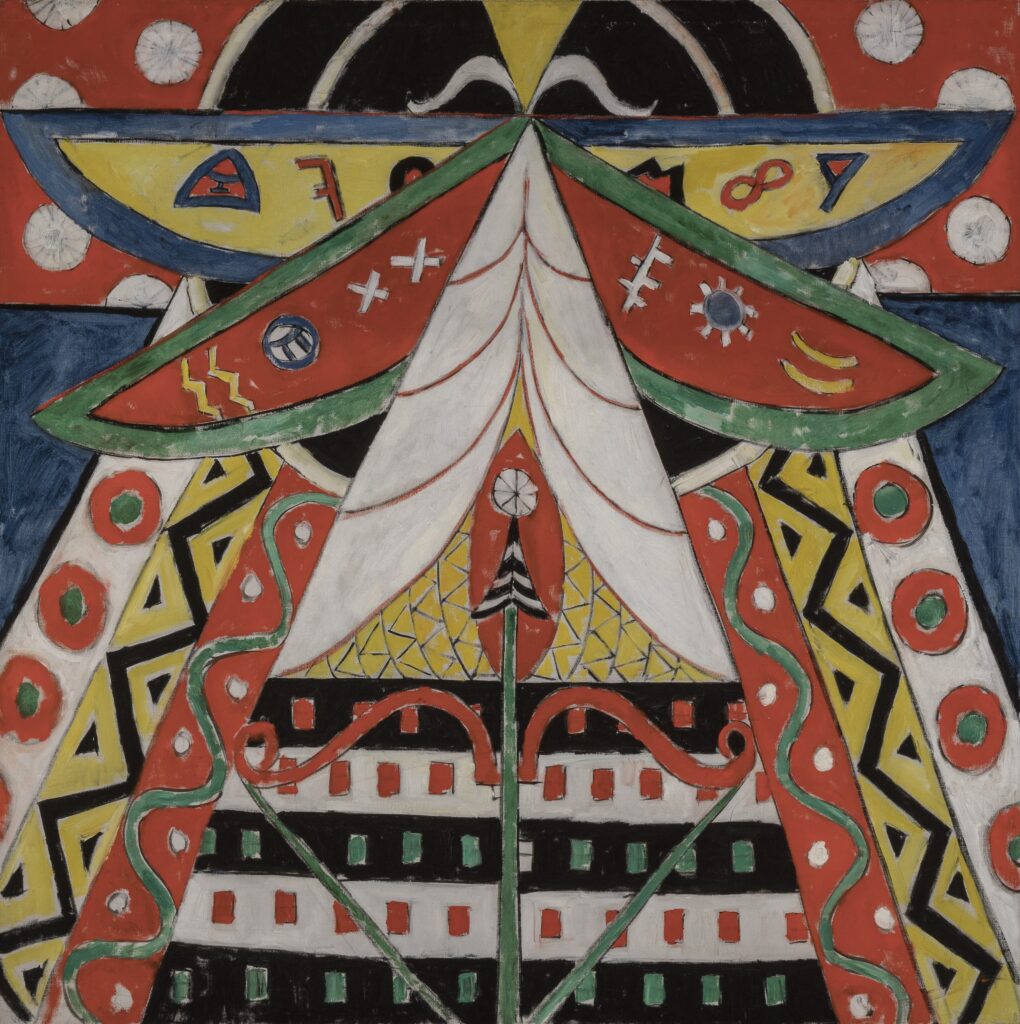
The museum selected a painting by Marsden Hartley (American, 1877–1943) because his importance to the development of abstraction, as well as that of other American artists, is relatively unknown in the United Kingdom. Displaying Hartley’s Painting No. 50, Berlin allows the museum to expand visitors’ understanding of Western abstract painting and to highlight connections and differences between painting in Europe and America during this period. “This exceptional loan bridges a significant gap between European and American modernism, enriching the National Gallery’s collection at a defining moment in its evolution towards twentieth-century art and beyond, while fostering new avenues for scholarship, interpretation, and visitor engagement,” said Associate Curators Chiara di Stefano and Sarah Herring of the National Gallery, London.
As the work was created during Hartley’s Berlin period, after which he returned directly to the U.S., it was little known among British artists in his lifetime. Painting No. 50, Berlin also has particular significance, since Hartley returned to more stark figurative forms later in his practice, so this work offers a fascinating snapshot of his style at a key point in his career.